

Craft
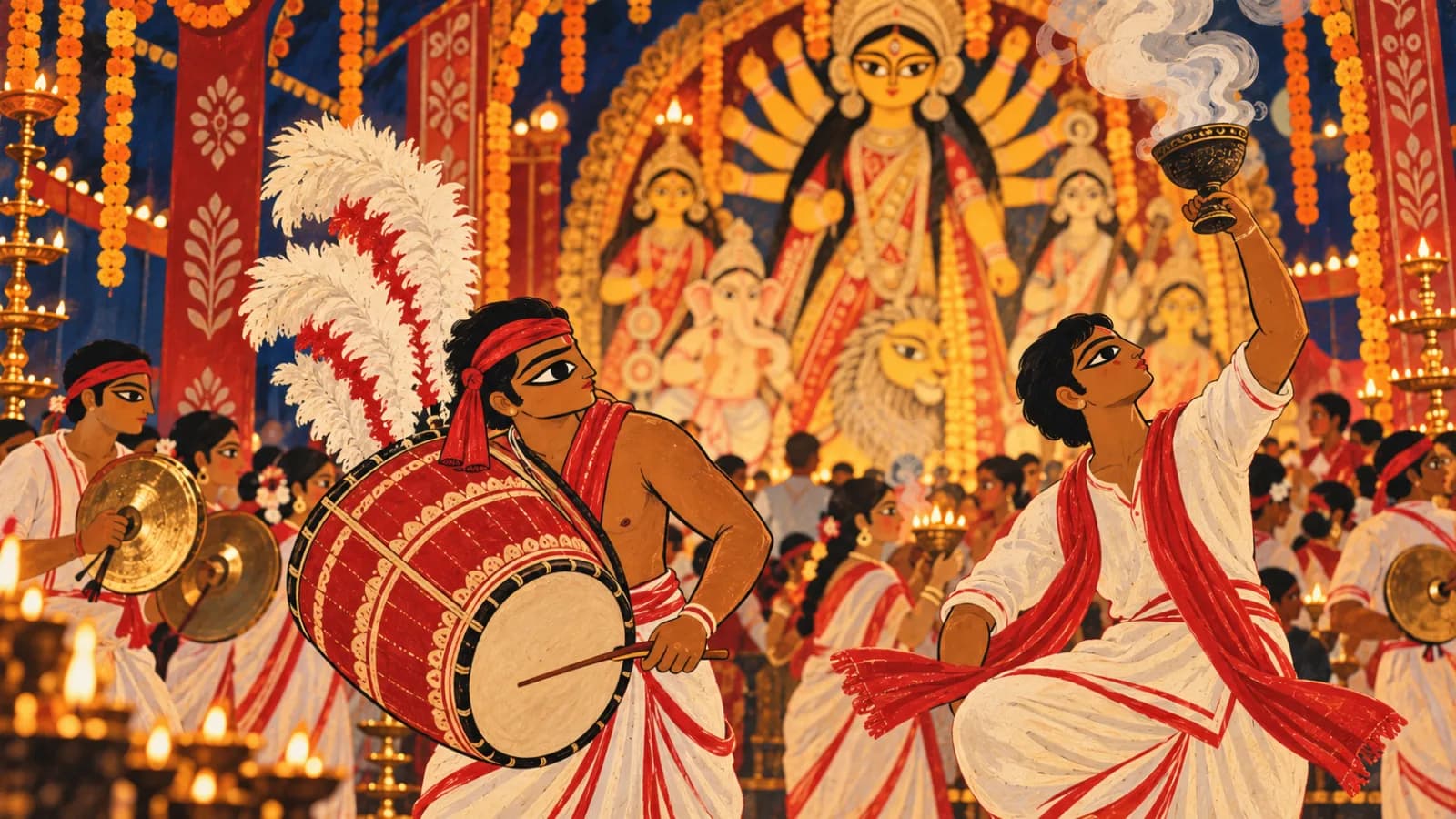
The art of dhak: the heartbeat of Pujo
Who the dhakis are, where they come from, how the drum is made and played, and why a pujo without dhak is a pujo that has not started.
The people, crafts, houses, food and streets that make Pujo. Five pieces, each a slow read.
Craft
Who the dhakis are, where they come from, how the drum is made and played, and why a pujo without dhak is a pujo that has not started.
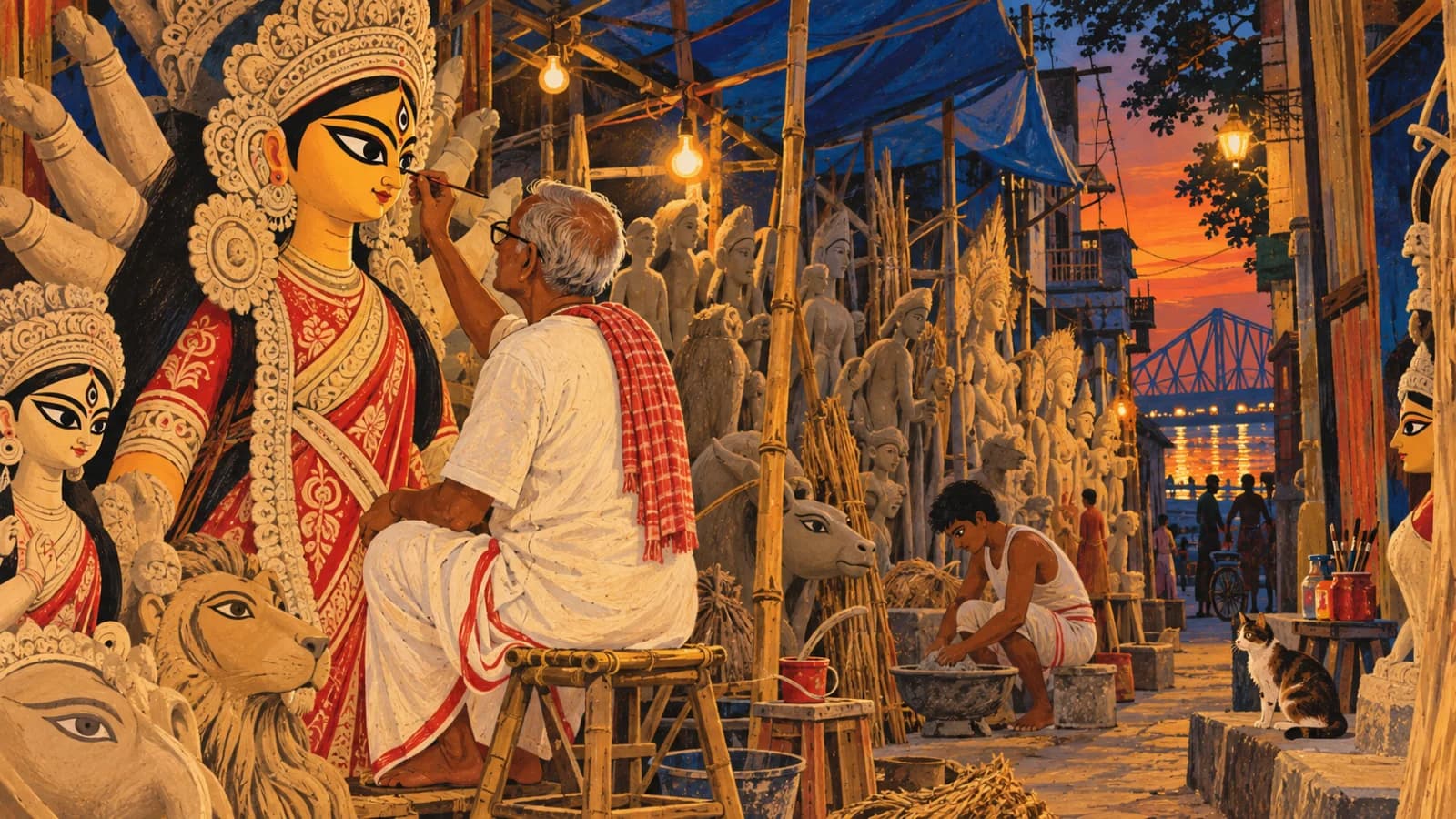 Craft · 7 minute readKumartuli: where the Goddess is madeA walk through the potters' quarter of North Kolkata: the river clay and straw skeletons, the coats that dry and crack, the single brushstroke of Chokkhu Daan, and the families, now with more and more women, who have shaped Durga here for three hundred years.
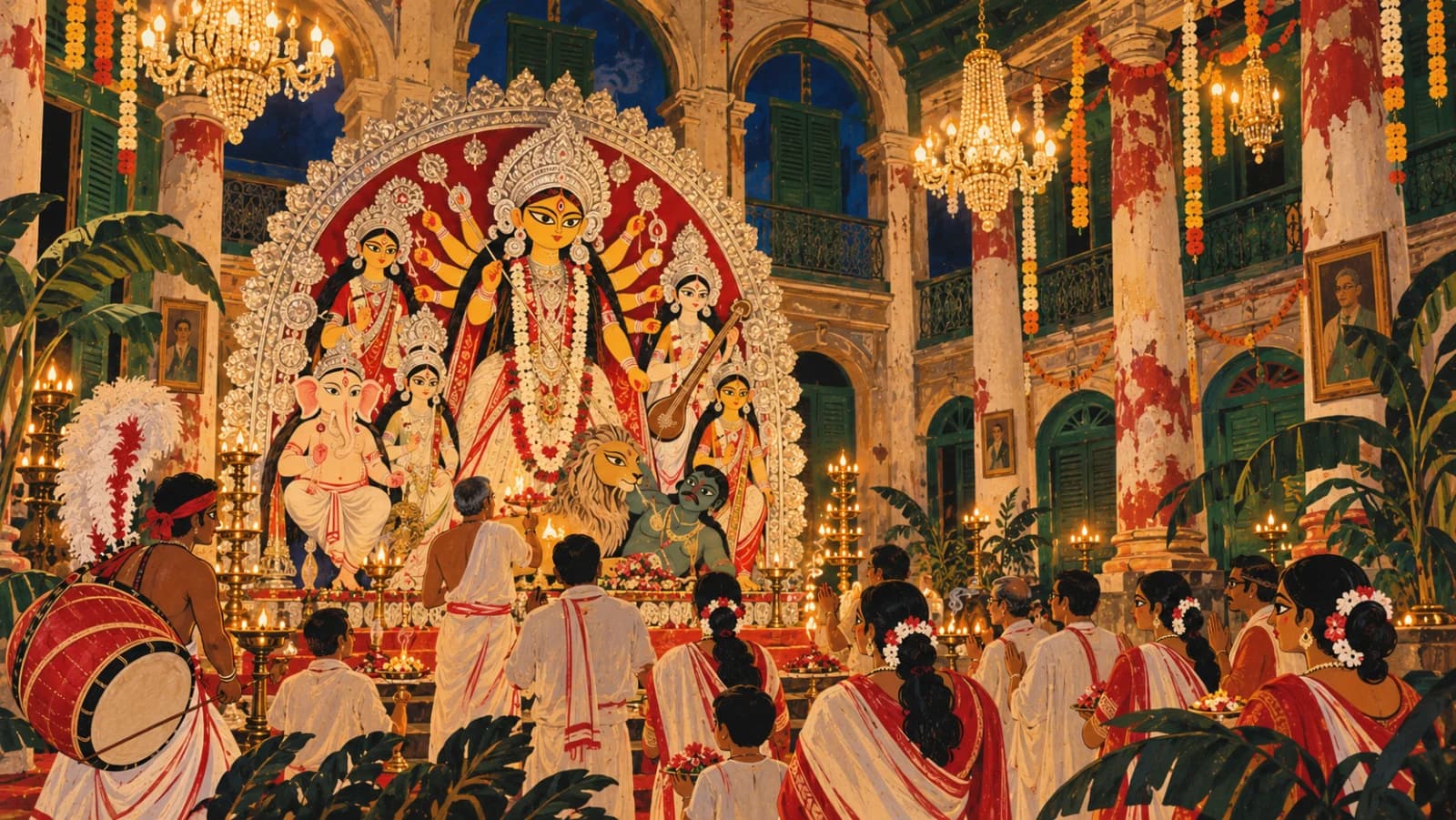 Heritage · 6 minute readBonedi bari: the household pujos that came before the pandalBefore the sarbojanin committees and their theme pandals, Pujo belonged to the great houses of old Kolkata, kept on the thakurdalan of a family's own mansion. Many of those courtyards still open their gates for four days each autumn. What a bonedi pujo is, how the houses came to be, and how to stand in one with grace.
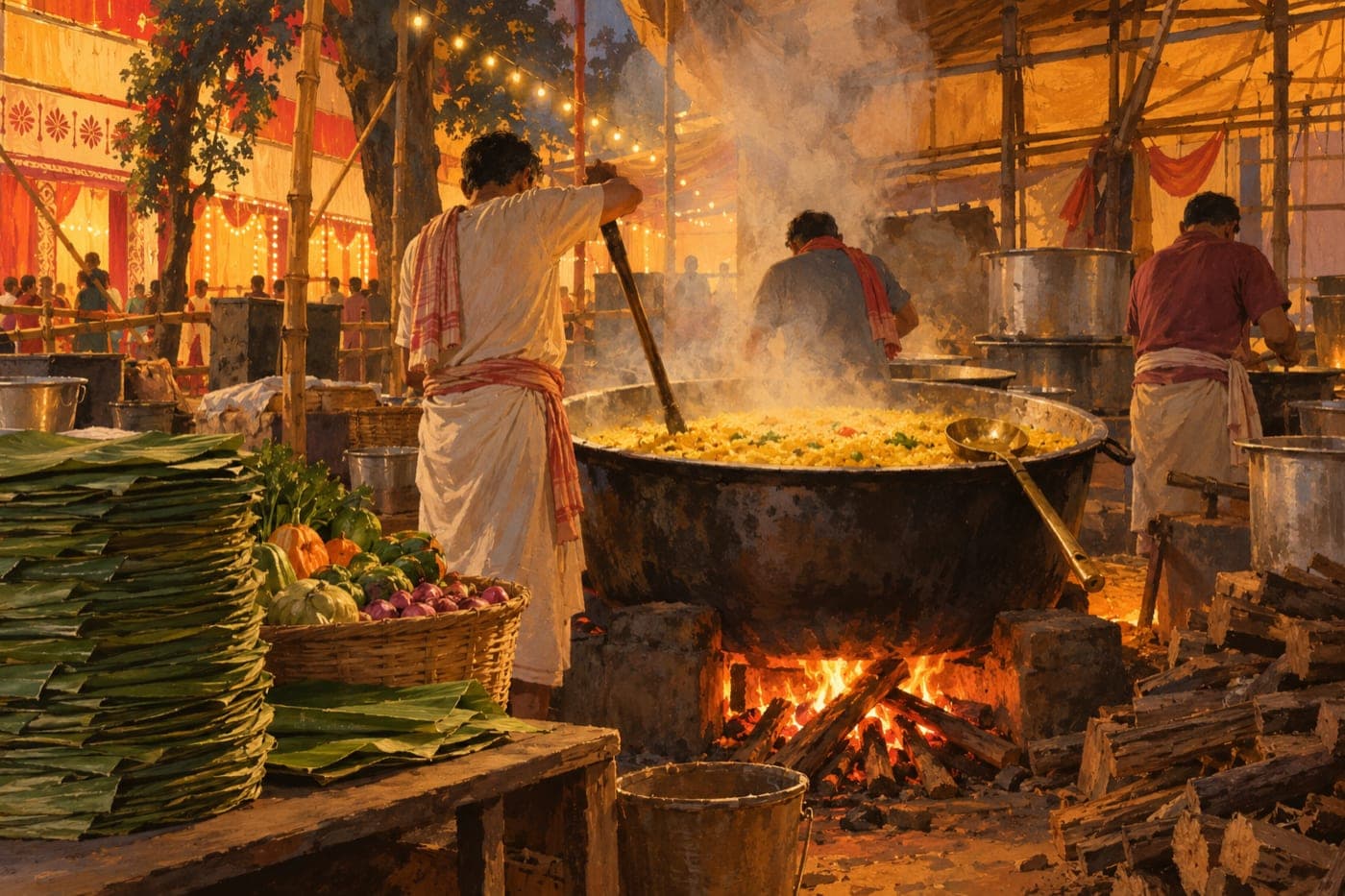 Food · 6 minute readBhog: the kitchen behind the pandalThe khichuri, labra and payesh cooked in a giant cauldron, blessed at the Goddess's feet and shared with the whole para. Who cooks it, what goes in, and how to eat it well.
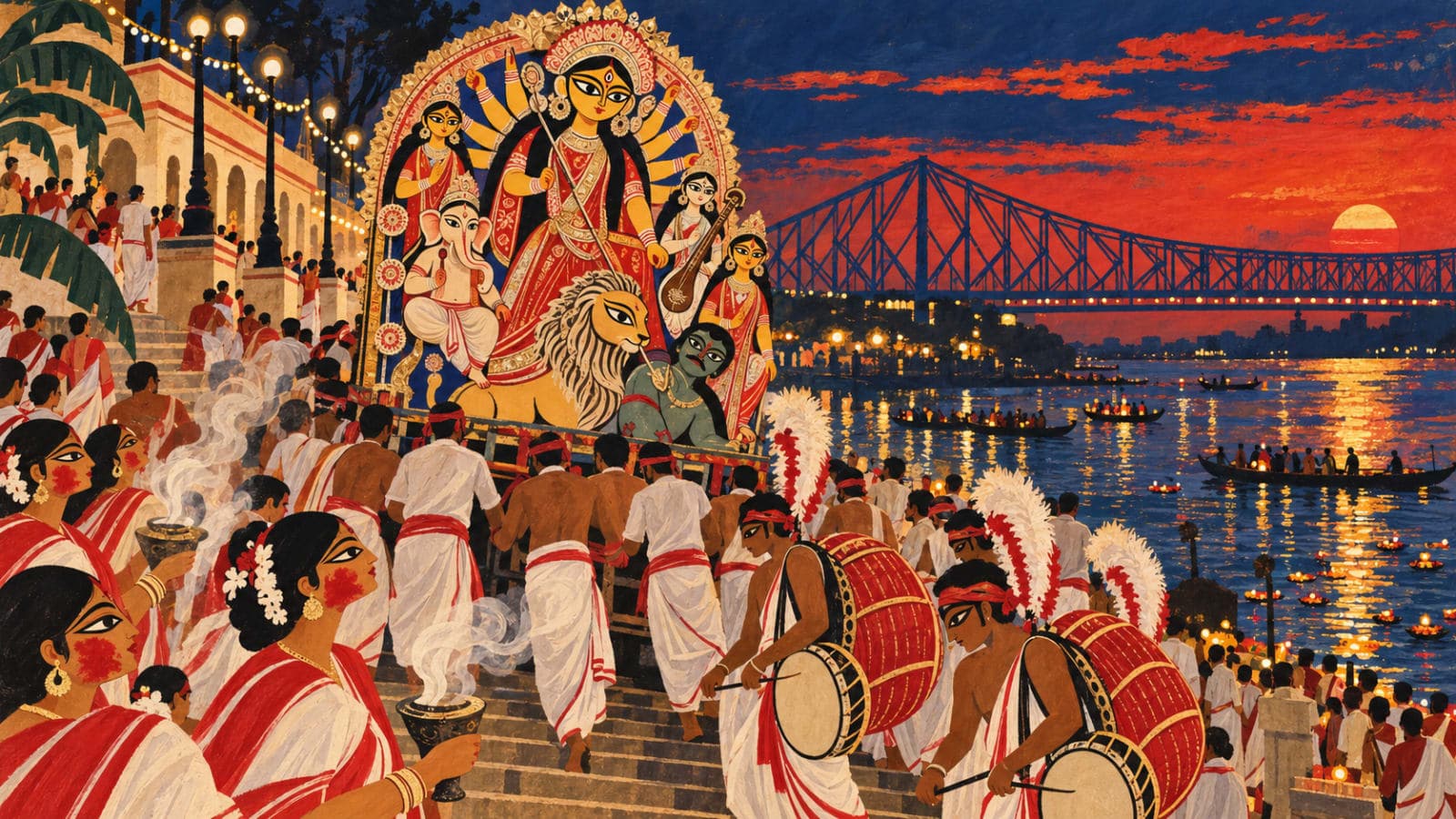 Immersion · 8 minute readBisarjan: the long goodbye on the HooghlyHow Kolkata lets the Mother go: the boron farewell and the red storm of sindoor khela, the drum-led procession to the ghats, the immersion in the Hooghly, and the Red Road carnival that now closes the festival.